
CDP Guest Lecture: Professor Mark R. Thompson (City University of Hong Kong)
- Date
- Tuesday 12 May 2026, 12-1pm
- Location
- Baines Wing SR 3.06
- Category
- CDP Events
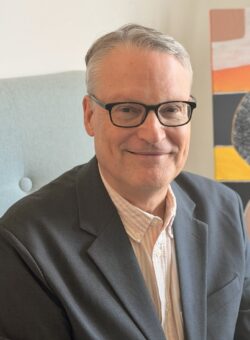
Professor Mark R. Thompson, City University of Hong Kong
CDP Lunchtime Guest Lecture
Title: Is Moderation Always Best? Opposition Pushback against Democratic Backsliding in Southeast Asia
Speaker: Professor Mark R. Thompson, City University of Hong Kong
Date: Tuesday, 12 May 2026
Time: 12:00-13:00 (lunch provided)
Location: Baines Wing SR 3.06
Sign up for the event by clicking here.
Is Moderation Always Best? Opposition Pushback against Democratic Backsliding in Southeast Asia
An influential argument in the pushback-against-backsliding literature is that radicalized opposition risks strengthening a shift towards authoritarianism. It is said to be safer to adopt moderate goals and institutional strategies within a democratic framework, providing fewer excuses for a crackdown while buying time to defeat autocrats. Yet evidence from six Southeast Asian countries undergoing democratic backsliding which still have (or recently had) semi-competitive elections and active civil societies demonstrates largely the inverse of this moderation hypothesis. While militant social movements with “radicalized” demands in Southeast Asia have sometimes been used to justify subjugation, this argument is circular as radicalization has often been the consequence of regime repression not its cause. The repression-radicalization nexus has created synergies between political parties and social movements - as seen in the “revolutionary” opposition against the recent coup in Myanmar, monarchy-critical student protests in Thailand, and the Bersih election reform rallies in Malaysia. By contrast, moderate opposition against rulers employing targeted or calibrated repression in Indonesia, the Philippines, and Singapore has involved more limited cooperation between parties and activists, resulting in weaker electoral as well as civil societal pushback and allowing regimes to claim to be ruling “democratically” despite autocratization. Although regional comparison cannot claim global generalizability, at a minimum it points to a conceptual “travelling problem”, suggesting the dynamics of opposition against autocratization need to be rethought. Recent events from the U.S. state of Minnesota to Bangladesh add plausibility to the claim that radicalization following repression, not moderation in order to avoid government crackdowns leads to stronger pushback against backsliding.
Mark R. Thompson is chair professor in the Department of Public and International Affairs at the City University of Hong Kong where he was director of the Southeast Asia Research Centre (SEARC) from 2011-2025. He is among the world’s top 2% most-cited scientists in the subfield of “Political Science & Public Administration” according to the 2024 Stanford/Elsevier annual report. His research - which has been featured in the popular media and academic blogs - includes 12 books as author or editor, most recently Towards Inclusive Social Policies: Southeast Asia after the Pandemic (Bristol, 2025, co-author), The Philippines: From “People Power” to Democratic Backsliding (Cambridge, 2023), Presidentialism and Democracy in Southeast and East Asia (co-editor, Routledge, 2022), and China’s “Singapore Model” and Authoritarian Learning (co-editor, Routledge, 2020). He has received external grants worth over one million USD, including five as PI from the Hong Kong Research Grants Council. A past president of the Asian Political and International Studies Association and the Hong Kong Political Science Association, he was Lee Kong Chian Distinguished Fellow for Southeast Asian Studies at the National University of Singapore (2008) and Stanford University (2009) as well as a visiting fellow at the Center for Southeast Asian Studies (CSEAS), Kyoto University in winter/spring 2024.